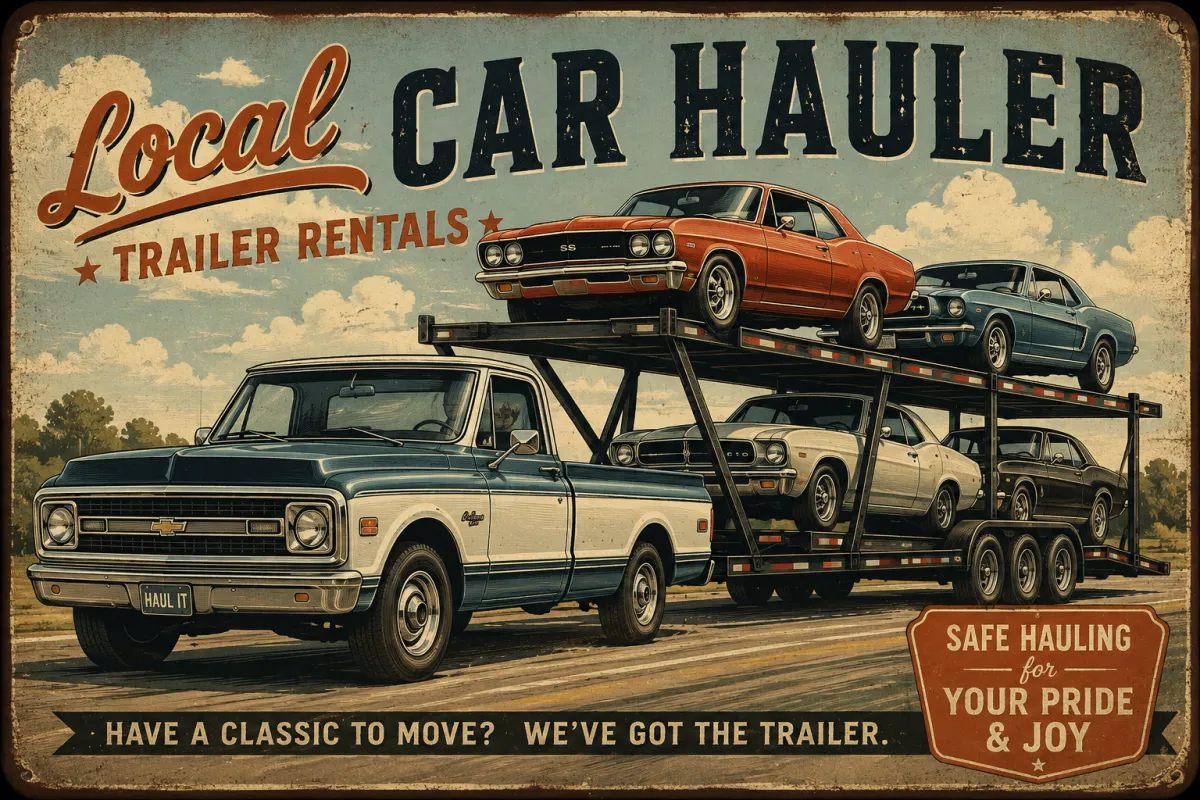
Car Hauler Trailer Rentals Near Me
A private sale falls through fast when the car will not start, the buyer is waiting, and you are still figuring out how to move it. That is usually when people start searching for car hauler trailer rentals near me. What matters next is not flashy marketing. It is whether the trailer fits the vehicle, your truck can tow it safely, and the rental process is simple enough to get you on the road without wasting half the day.
If you need to move a car, small truck, ATV, UTV, or light equipment, the best rental is the one that matches the job without adding unnecessary cost or complexity. For most local customers, that comes down to two things: choosing the right capacity and knowing your tow setup before you book.
What to look for in car hauler trailer rentals near me
A car hauler rental should solve a specific transport problem. Maybe you bought a project car that does not run. Maybe you are moving a vehicle between homes, dropping off a machine for service, or hauling powersports equipment for the weekend. In each case, the right trailer depends on weight, dimensions, and how easy the load will be to secure.
Start with capacity, not price. A trailer that is too small for the job is not a bargain. It is a risk. You need enough payload for the vehicle itself, plus confidence that the frame, ramps, and tie-down points are built for that kind of load.
Condition matters too. Clean trailers, working lights, dependable tires, and functioning winches save time and reduce stress. If the trailer includes practical equipment like a ball adapter and secure tie-down capability, that can make a real difference, especially for first-time renters.
Local support is another factor people underestimate. If you are renting nearby, it helps to talk to someone who can confirm fitment, answer towing questions, and help you decide between options without turning it into a sales pitch.
Choosing between a 10K and 14K car hauler
Most renters do not need ten trailer options. They need the right two or three. That is why a straightforward fleet often works better than a huge inventory.
A 10K car hauler is usually the practical choice for standard cars, many crossovers, smaller SUVs, some ATVs and UTVs, and lighter equipment. It handles a wide range of everyday moves without requiring more trailer than necessary. If you are transporting a sedan, compact vehicle, or project car, this is often the place to start.
A 14K car hauler makes more sense when the vehicle is heavier, wider, or less forgiving to load. Full-size trucks, larger SUVs, and heavier equipment may push you into this category. The extra capacity gives you more margin, which is useful when curb weight, accessories, or cargo add up quickly.
The trade-off is simple. A larger trailer can handle more, but it may also require a more capable tow vehicle and more attention to brake controller setup, hitch rating, and overall towing comfort. Bigger is not automatically better. The right fit is better.
If you are between sizes, ask about the exact vehicle you plan to move. Year, make, model, and any modifications can affect the recommendation.
Before you book, check your tow vehicle
The biggest mistake renters make is assuming their truck can tow the trailer just because it has a hitch. Safe towing depends on several ratings working together.
You want to confirm your vehicle’s tow rating, payload rating, hitch rating, and whether you have the correct ball size and connector. Trailer brakes may also require a brake controller, depending on the setup. These are not minor details. They affect stopping distance, stability, and legal compliance.
You should also think about the real-world version of towing, not just the brochure number. A half-ton pickup may be rated well on paper, but the actual load, passengers, gear in the bed, and trailer weight all count. If you are close to the limit, a heavier trailer may not be the smart choice.
This is where a local rental company can help. Ocean State Trailer Rentals keeps the process practical by helping customers match the trailer to both the load and the tow vehicle, which is especially useful if you tow only occasionally.
Loading and securing the vehicle the right way
Getting the trailer is only part of the job. The load has to be placed correctly and secured well enough to stay stable for the whole trip.
Weight distribution matters. Too much weight behind the trailer axle can create sway. Too much weight forward can overload the hitch. A balanced load helps the trailer track properly and makes towing more predictable.
For non-running vehicles, a winch can turn a difficult load into a manageable one. That is especially helpful if the car has mechanical issues, flat tires, or limited clearance. Ramps should be used on level ground whenever possible, and loading should be slow and deliberate.
Tie-down points should be solid, the straps should be rated for the load, and everything should be checked before you leave. Then check it again after a few miles. Straps can settle once the vehicle shifts slightly into place.
If you are hauling an ATV, UTV, or light equipment, the same principle applies. Secure each unit based on how it sits on the deck, not just where it is convenient to hook a strap.
When a local car hauler rental makes the most sense
Buying a trailer sounds appealing until you add up storage, maintenance, registration, tire replacement, bearing service, and the fact that it may sit most of the year. For many customers, renting makes better financial sense.
That is especially true for occasional jobs like moving a vehicle after a private purchase, bringing a car to a body shop, relocating a project vehicle, or hauling a machine for a short-term job. You get the benefit of a purpose-built trailer without taking on ownership costs.
A local rental also cuts down on unnecessary hassle. You are not coordinating with a distant provider, guessing at trailer condition, or wasting time on generic options that are not built for vehicle transport. You can get a trailer that is intended for the job and support from people who understand common towing questions in your area.
For customers in Rhode Island, Connecticut, and Massachusetts, that local angle matters. Routes, trip length, and pickup timing all affect what kind of rental makes sense.
How to compare rental options without overthinking it
If you are comparing car hauler trailer rentals near me, keep the checklist simple. First, confirm the trailer can handle your vehicle’s size and weight. Second, make sure your tow vehicle is equipped to pull it safely. Third, ask what is included.
Included equipment can save you from extra stops and last-minute problems. A winch, usable tie-down setup, and ball adapter can make the rental much more straightforward. Flexible scheduling helps too, especially if your pickup or drop-off depends on a seller, repair shop, or moving timeline.
Price still matters, but only after the basics are covered. A cheaper rental is not worth much if it leaves you scrambling for accessories or second-guessing whether your load is properly supported.
It also helps to choose a provider that gives direct answers. If you ask whether your F-150 can tow a 14K car hauler with your specific vehicle on it, you should get a clear recommendation, not vague language.
Common situations renters ask about
A lot of trailer rentals come down to familiar scenarios. One is the non-running car that needs to get home after a purchase. Another is the project vehicle that finally has a shop appointment. Some renters need to move a side-by-side or ATV for a trip, while others are relocating and need to transport an extra vehicle without driving it.
There are also customers who need short-term hauling capacity for small equipment. In those cases, deck space, axle rating, and tie-down security matter just as much as they do for cars and trucks.
The details change, but the decision process is the same. Match the trailer to the load, match the load to the tow vehicle, and give yourself enough margin that the trip feels controlled rather than stressful.
Booking with fewer surprises
The smoothest rentals happen when the customer brings a few basic details up front. Know what you are hauling, roughly how much it weighs, and what tow vehicle you plan to use. If you know the hitch setup and connector type, even better.
That allows the rental company to point you toward the right trailer quickly. It also helps avoid the most common issues at pickup, such as a mismatch between hitch hardware and trailer requirements or a load that is heavier than expected.
If you are a first-time renter, ask the questions before pickup day. Ask about loading, tie-downs, brake requirements, and what is included with the trailer. Straight answers early on save time later.
The right rental should feel practical from the first phone call to the final drop-off. You should know what you are getting, what it can handle, and what you need to tow it safely. When that part is clear, the rest of the job usually goes a lot smoother.
If you are looking for a trailer because a vehicle needs to move this week, keep it simple. Choose a local provider, get the right capacity, and make sure your towing setup is ready before pickup. That is usually the fastest path from stuck in the driveway to on the road.
